
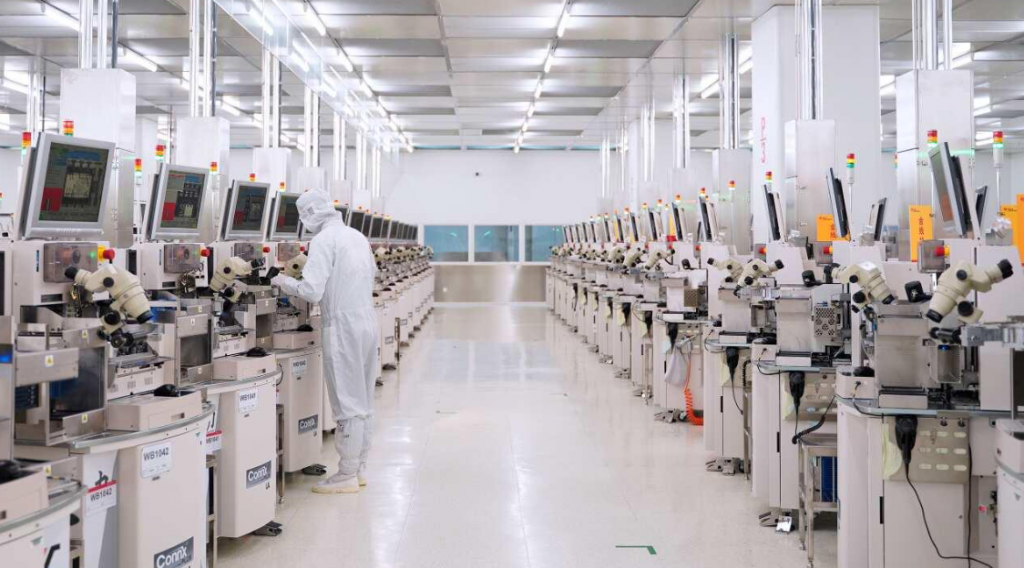
 Valeo, a leading global automotive supplier specializing in advanced driver assistance systems and electrification technologies, has officially broken ground on a state-of-the-art $225 million manufacturing facility in McAllen, Texas. This strategic investment underscores the growing demand for high-performance computing solutions in modern vehicles, particularly for General Motors’ upcoming next-generation platforms. The plant will serve as a key production hub for central compute units, which are critical components enabling autonomous driving features, connected vehicle functionalities, and enhanced infotainment systems.
The decision to locate the facility in Texas aligns with the U.S. automotive industry’s push towards reshoring critical supply chains amid ongoing geopolitical tensions and tariff uncertainties. McAllen, situated in the Rio Grande Valley, offers logistical advantages with proximity to major highways and cross-border trade routes, facilitating efficient distribution to GM’s assembly plants across North America. This move is expected to create hundreds of high-skilled jobs in the region, boosting local economies while supporting the broader U.S. manufacturing renaissance.
Central compute units represent a pivotal shift in vehicle architecture, consolidating processing power for multiple domains including powertrain control, safety systems, and user interfaces into a single, powerful module. For GM, these units are integral to their Ultium-based electric vehicle lineup and future internal combustion engine hybrids, enabling over-the-air updates, AI-driven decision-making, and seamless integration of telematics. Valeo’s expertise in semiconductor integration and software-defined vehicles positions them as an ideal partner, with the facility incorporating Industry 4.0 technologies such as robotics, AI quality control, and digital twins for optimized production.
This development comes at a time when OEMs like GM are accelerating investments in software-defined vehicles to compete with tech-forward rivals like Tesla. The partnership highlights deepening collaboration between Tier 1 suppliers and automakers, addressing supply chain vulnerabilities exposed by recent disruptions. Valeo’s commitment reflects confidence in the long-term growth of ADAS and EV markets, projected to exceed $100 billion globally by 2030. Production is slated to ramp up by late 2027, with initial volumes dedicated to GM’s truck and SUV segments.
Industry analysts view this as a bellwether for supplier expansion in the U.S., potentially spurring similar investments from competitors. Challenges include navigating skilled labor shortages and raw material fluctuations, but Valeo’s proven track record in North America—bolstered by existing facilities in Michigan and Ohio—mitigates risks. This project not only fortifies GM’s supply chain resilience but also advances the ecosystem towards Level 3+ autonomy, where compute power is the linchpin. Stakeholders anticipate ripple effects across R&D, testing, and logistics sectors, reinforcing Texas as an emerging automotive hub.
Furthermore, the facility will incorporate sustainable manufacturing practices, including solar-powered operations and water recycling, aligning with corporate ESG goals. Executive commentary from Valeo’s leadership emphasizes the strategic imperative of localized production to reduce lead times and enhance responsiveness to OEM demands. As the automotive sector pivots towards electrification and connectivity, such investments are crucial for maintaining competitive edges in a fragmented global market.
In summary, Valeo’s Texas plant exemplifies the convergence of manufacturing innovation and strategic partnerships, poised to drive the next wave of vehicle intelligence. This B2B milestone will undoubtedly influence supply chain dynamics, technology roadmaps, and regional development for years to come.
